Phone Number Reputation Management for Healthcare: Protecting Patient Callback Lines from Spam Labels

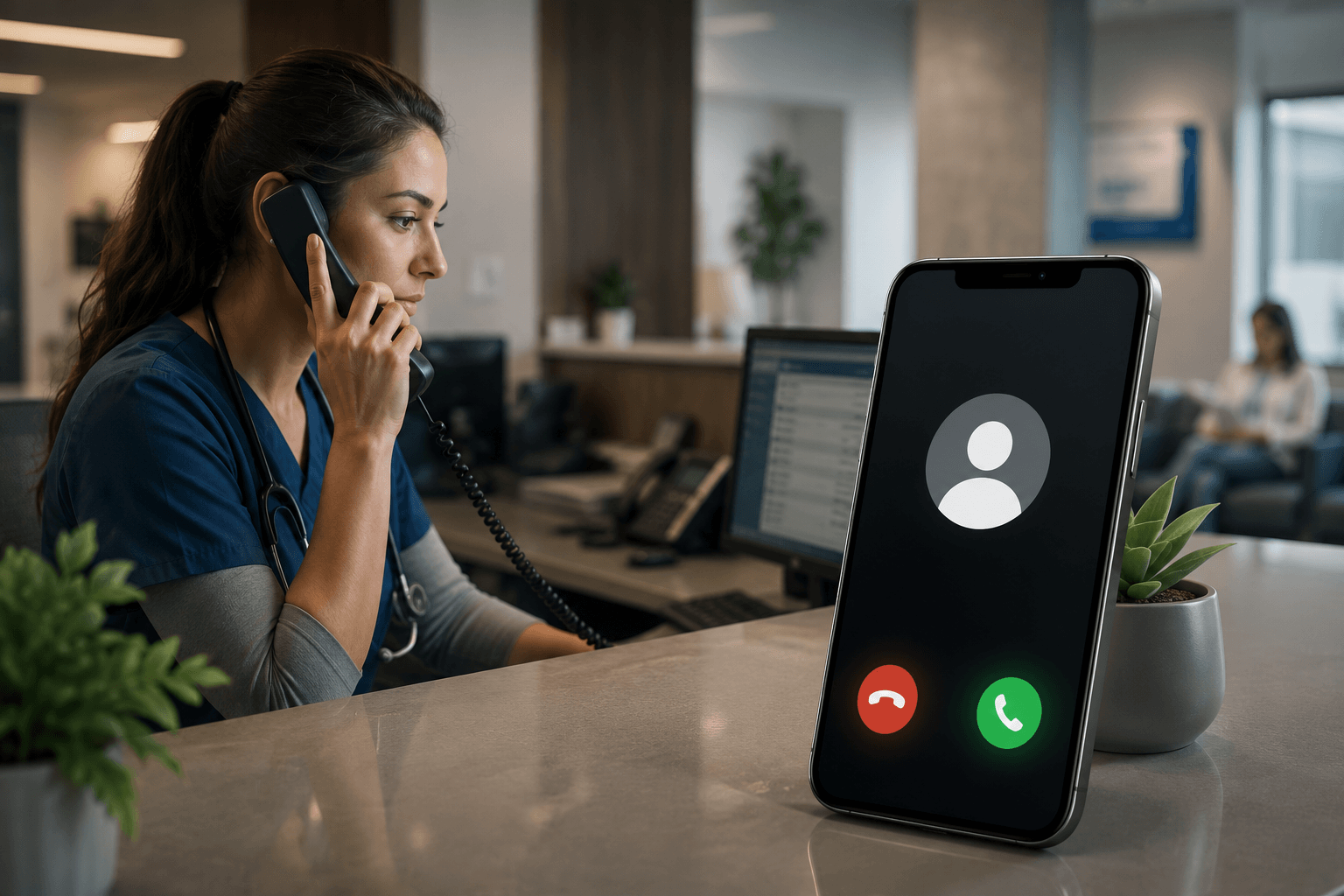
Phone number reputation management for healthcare is now a patient safety issue, not just a marketing problem. When your callback lines show up as "Spam Likely," patients stop answering. Reminders go unheard. Lab results wait in voicemail. Care teams dial the same patient three times and still miss them. Your clinic did nothing wrong. Carrier spam filters simply decided that a busy clinic calling hundreds of patients looks like a robocaller. This guide explains why healthcare numbers get flagged, what those labels cost, and how to protect the lines your patients depend on.
TL;DR and Key Takeaways
Carrier spam filters often mislabel real healthcare calls because clinics dial like call centers: high volume, short calls, one direction. Phone number reputation management registers, watches, and clears your numbers so patients see a trusted caller instead of a warning.
- Spam labels can cut answer rates by 40 to 60 percent, and patients rarely call back an unknown number.
- Reminders, callback lines, and refill alerts are the most commonly flagged healthcare call types.
- STIR/SHAKEN proves who is calling, but it does not stop carrier filters from labeling verified calls as spam.
- HIPAA does not block label cleanup, but vendor choice matters when call data touches patient records.
- Registration, constant watching, and automatic cleanup keep callback lines clean with no manual carrier appeals.
Who This Is For
Best for: IT directors, practice admins, and ops leaders at clinics, hospital systems, dental groups, and mental health practices that place outbound patient calls every day.
Not ideal for: A solo provider who places a few calls per week from one number, where the risk of a flag is low.
Top use cases: Patient callback lines, reminder campaigns, refill alerts, referral calls, and billing outreach.
What Is Phone Number Reputation Management for Healthcare?
Phone number reputation management is a service that tracks how carriers score your outbound numbers, then clears spam labels before they choke your calls. For healthcare, it protects patient callback lines, reminder campaigns, and clinical outreach from being marked "Spam Likely." It combines number registration, constant checks, and label cleanup across the AT&T, Verizon, and T-Mobile networks.
Think of reputation management as credit watching for your phone lines. Each major carrier runs its own spam filter, and each filter scores your numbers on calling habits. A reputation management service watches those scores on every network and steps in when a label appears.
Our phone number reputation management guide covers the general business case. Healthcare deserves its own playbook because the stakes differ. A missed sales call costs revenue — a missed callback about an abnormal lab result costs continuity of care.
Why Do Healthcare Phone Numbers Get Flagged as Spam?
Healthcare numbers get flagged because clinical calling patterns look just like robocall patterns. Carrier filters do not read intent. They read habits: call volume, call length, answer rates, and complaints.
High Volume Outbound Looks Like Robocalling
A midsize clinic can place hundreds of outbound calls a day. Most are short. Many go unanswered because patients are at work. Some patients tap "block" on a number they do not know. To a spam filter, that pattern of heavy volume, short calls, low answers, and blocks is the robocaller profile. The filter applies a label, and every later call inherits it.
The problem then feeds itself. Once a label appears, fewer patients answer, which deepens the very signal that caused the label. Our team has written about this answer rate spiral in outbound sales, and the mechanics in healthcare are the same.
The STIR/SHAKEN Side Effect
STIR/SHAKEN is the caller ID proof system that the FCC requires of carriers. It confirms a call truly comes from the number it claims. Under the FCC call authentication rules, carriers must attest to the calls on their networks. That fights illegal spoofing, and healthcare wins there, since hospital numbers were once favorite spoofing targets.
Here is the side effect: STIR/SHAKEN proves identity, not reputation. Your calls can pass with full marks and still get labeled spam by a filter that only sees volume. Proof of identity and number reputation are separate systems, and clinics need both working in their favor.
What Spam Labels Cost a Healthcare Organization
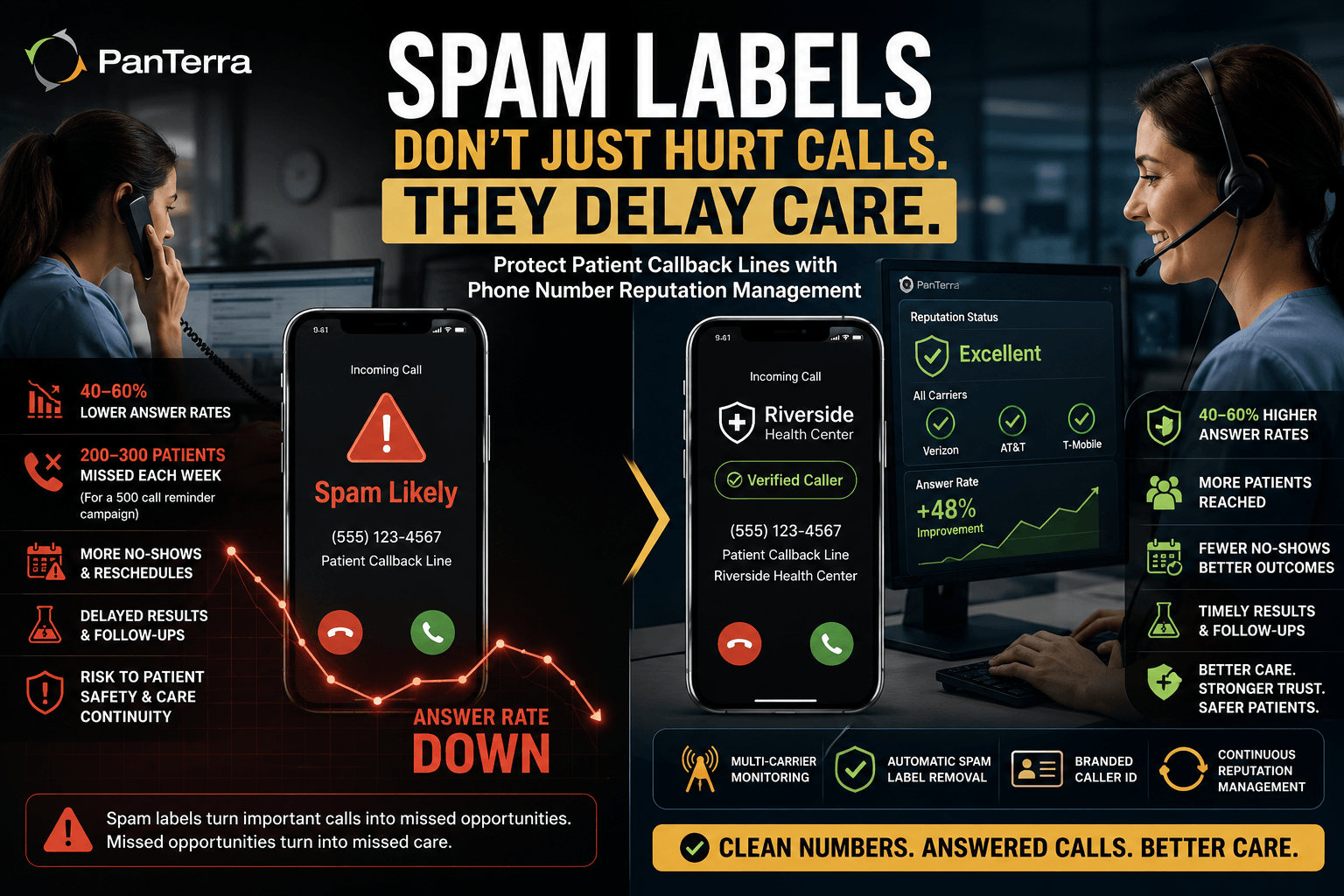
Spam labels cost a clinic answered calls first, and everything else follows. Numbers flagged as spam see answer rates drop by 40 to 60 percent. For a clinic placing 500 reminder calls a week, that means 200 to 300 patients who never hear the reminder.
Metric callout: A spam label can cut patient answer rates by 40 to 60 percent. On 500 weekly reminder calls, that is up to 300 patients missed every week, before anyone on staff knows the label exists.
Unanswered reminders turn into missed visits. Per the MGMA Stat poll from August 2025, practices that held their missed visit rates steady credited steady patient outreach, mainly frequent digital reminders, automated calls, and live calls (MGMA, 2025). The reminder machine only works if the call gets through. A spam label quietly breaks it while your staff assumes patients just do not pick up.
The costs stack fast from there. Staff redial patients who did not answer, which burns hours and pushes volume even higher. Referrals slow when calls sit unanswered. Patients feel unreachable, then annoyed when the clinic finally connects. None of it shows up on a dashboard labeled "spam problem," which is why the label often survives for months.
Does HIPAA Change How You Fix Spam Labels?
HIPAA does not stop you from fixing spam labels, but it shapes which vendors you can use. The cleanup itself involves business phone numbers and call metadata, not patient health data. Registering numbers and disputing labels is compliant activity.
Vendor choice is where compliance enters. If your reputation management provider is also your phone platform, call records that touch patient visits may flow through its systems. That vendor should sign a business associate agreement and hold current security credentials. The bar: HIPAA and HITECH compliance with a signed BAA, SOC 2 Type II audits, and AES-256 encryption for data in motion and at rest. Our HIPAA compliant phone system guide walks through the full vendor checklist.
One more rule unique to healthcare: keep clinical detail out of caller ID names and voicemails. A branded caller ID should say "Lakeside Family Medicine," never anything that implies the reason for the call. Reputation management restores the connection. Your privacy policies still govern what gets said.
How to Protect Patient Callback Lines
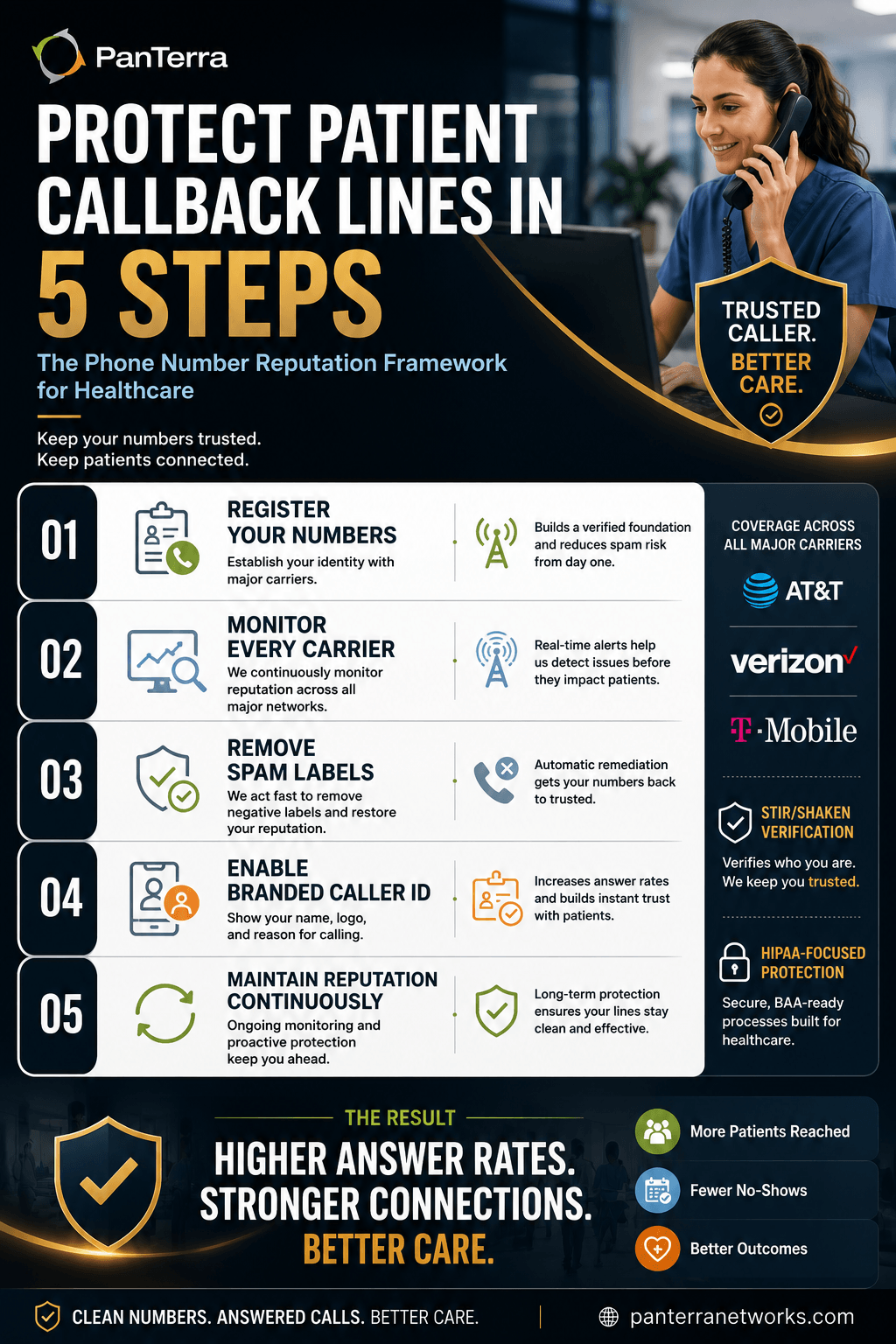
Protecting callback lines is a process you run all the time, not a form you file once. Five steps cover it:
- Register your numbers. Submit every outbound number to carrier registries with proof of who owns them. Registered numbers with known owners get scored fairly. Unknown numbers do not.
- Watch every major carrier. A number can be clean on Verizon and flagged on T-Mobile the same afternoon. Each filter scores on its own, so checks must run per network and around the clock.
- Clear labels at once. When a label appears, a cleanup request with documents goes to the carrier. Managed reputation management services automate this. Manual appeals take two to three business days per carrier, per number.
- Add branded caller ID. Showing your clinic name instead of a bare number lifts answer rates and cuts the patient blocks that feed spam scores.
- Consolidate your lines. Audit which teams call from which numbers. Spreading reminder volume across a small set of registered numbers beats pounding one line, and it prevents shadow numbers nobody watches.
Manual vs. managed label cleanup:
|
Factor |
Manual (DIY) |
Managed service |
|---|---|---|
|
Label detection |
When patients complain |
Minutes, via constant checks |
|
Carrier appeals |
Staff files each one |
Sent for you |
|
Time to resolve |
2 to 3 business days each |
Ongoing, ahead of damage |
|
Coverage |
One carrier at a time |
AT&T, Verizon, T-Mobile, plus filter vendors |
|
Typical cost |
Staff hours |
$10 to $20 per number monthly |
In my sales calls with healthcare IT teams, the pattern repeats: nobody owns number reputation until a physician asks why patients stopped answering. The clinics that stay ahead of it treat reputation management as infrastructure, the same way they treat uptime.
Platform choice matters here. PanTerra Networks builds Reputation Management directly into its cloud phone platform at $10 per number monthly — about 40 percent below standalone reputation vendors. The same platform that carries your calls under HIPAA also watches your numbers day and night and clears labels for you. If your callback lines are flagged today, cleanup during onboarding removes existing labels, and our spam label removal guide explains what to expect.
FAQ
Why are patient callback calls marked as "Spam Likely"?
Carrier spam filters score numbers on habits: call volume, short calls, low answer rates, and blocks by patients. Busy clinic lines match the profile of robocallers, so the filters label real healthcare numbers. The label reflects your calling pattern, not your intent.
How do healthcare organizations remove a spam label from a phone number?
The clinic, or a reputation management service acting for it, files a cleanup request with each carrier that applied the label, along with business papers. Manual appeals resolve in two to three business days per carrier. Managed services spot labels within minutes and file the requests for you across networks.
Does STIR/SHAKEN stop legitimate healthcare calls from being labeled spam?
No. STIR/SHAKEN proves a call truly comes from the number shown, which fights spoofing. Spam labels come from separate carrier filters that score calling habits. A fully verified healthcare number can still be labeled "Spam Likely" if its volume looks like robocalling.
Does phone number reputation management require a BAA for HIPAA compliance?
Reputation management checks handle number data, not patient data. But when the service is part of your phone platform, patient call records may pass through the vendor, and that vendor should sign a business associate agreement. Pick reputation management providers with HIPAA and HITECH compliance, SOC 2 Type II audits, and strong encryption already in place.
How fast can a spam label be removed?
How fast you spot the label is what matters. Constant checks catch labels within minutes, and cleanup requests go out at once. Carrier processing then takes hours to a few business days. Without checks in place, labels often persist for weeks because nothing tells the clinic that patients see a warning.
.jpg?width=500&height=500&name=Are%20you%20Getting%20a%20Good%20Deal%20(1).jpg)
Comments