On-Premise vs Hosted VoIP for Small Businesses


VoIP (Voice over Internet Protocol) allows businesses to make voice calls using the internet instead of traditional phone lines.
There are two main types: on-premise and hosted VoIP.
On-premise VoIP is a business phone system where communication hardware and software are hosted and managed within the organization’s own infrastructure.
On the other hand, hosted VoIP is a cloud-based phone system where the service provider manages infrastructure, maintenance, and updates, delivering voice services over the internet.
Both options offer benefits but come with distinct advantages and disadvantages that affect costs, control, and scalability.
Key Takeaways
- On-premise VoIP provides greater control and customization, but requires significant upfront investment, ongoing maintenance, and dedicated IT resources.
- Hosted VoIP offers predictable costs and easier management by shifting infrastructure, updates, and reliability to a cloud service provider.
- Hosted VoIP scales more easily for small businesses, allowing users and features to be added without hardware upgrades or downtime.
- On-premise VoIP may suit regulated industries that require direct control over data and security policies.
- For most small businesses with limited IT resources, hosted VoIP delivers better flexibility, reliability, and long-term cost efficiency.
What Should Small Businesses Consider With On-Premise VoIP?
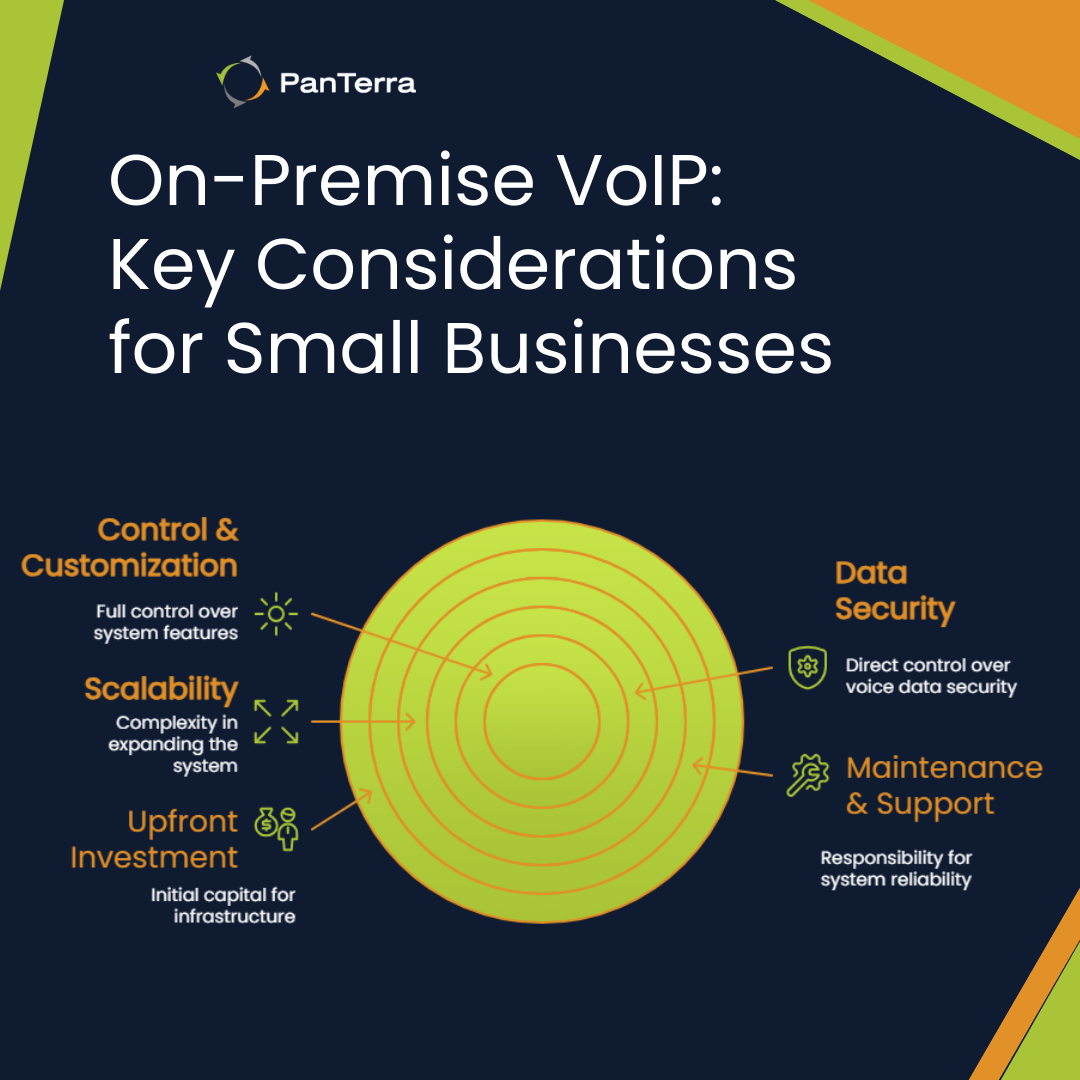
On-premise VoIP involves setting up and maintaining your communication infrastructure within your organization. You purchase the necessary hardware and software, and your IT team is responsible for installation, configuration, and ongoing management.
Control and Customization
One of the primary attractions of on-premise VoIP is the level of control it offers. Your IT team has complete control over the hardware, software, and configurations, allowing you to tailor the system internally to your specific needs.
This level of customization can be especially valuable if your business requires unique features or compliance with industry-specific regulations.
Data Security
With on-premise VoIP, your company retains full control over your data and can implement security measures according to your preferences.
This can be vital for businesses operating in highly regulated industries, such as healthcare or finance, where data security and compliance are paramount.
Initial Investment
One of the key considerations with on-premise VoIP is the upfront capital investment. You'll need to purchase and set up the necessary infrastructure, including servers, routers, switches, and other hardware components.
This initial cost can be substantial and may require budget planning.
Maintenance and Support
Maintaining an on-premise VoIP system involves ongoing expenses for hardware updates, security patches, and IT staff to manage the infrastructure.
Your in-house IT team or external support will be responsible for troubleshooting and ensuring system reliability.
This can be a benefit if you have a strong IT department but could be a drawback if your team lacks expertise in VoIP technology.
Scalability
Scaling an on-premise VoIP system can be more complex than a hosted solution. Adding new users or features often requires additional hardware and configuration, which may lead to extended downtime.
This limitation can be a challenge for businesses that expect significant growth or frequent changes in their communication needs.
What Should Small Businesses Consider When Opting for Hosted VoIP?
Hosted VoIP, also known as cloud-based VoIP, shifts the responsibility of infrastructure management and maintenance to a third-party provider.
With hosted VoIP, voice data is converted into digital packets that are transmitted over the internet and reassembled at the receiving end.
Cost Efficiency
One of the most significant benefits of hosted VoIP is cost efficiency. You can avoid the high initial investment associated with on-premise solutions as you don't need to purchase hardware or software.
Instead, you pay a subscription fee, often on a per-user basis, which provides predictable monthly costs.
Maintenance and Updates
Hosted VoIP providers handle maintenance and updates, ensuring your system is always up-to-date and secure.
This offloads the burden of managing hardware and software from your IT team, allowing them to focus on other critical tasks. It also eliminates the need for costly hardware upgrades and replacements.
Scalability
Hosted VoIP systems are highly scalable and flexible. Adding or removing users, features, or phone lines is usually a simple process that can be accomplished without significant downtime.
This adaptability is ideal for businesses with fluctuating or seasonal communication needs or those planning for growth.
Reliability and Redundancy
Hosted VoIP providers typically have data centers with redundant systems to ensure high availability and minimal downtime.
This reliability can be a significant advantage for businesses that rely on consistent communication with customers, partners, and remote workers. It ensures that your communication system is less vulnerable to network outages or hardware failures.
Accessibility
Hosted VoIP offers greater geographical flexibility, allowing employees to access the system from anywhere with an internet connection. This is especially valuable for businesses with remote and distributed teams, enabling a cohesive, integrated communication system regardless of geographical location.
Cloud communication platforms such as PanTerra Streams illustrate how hosted VoIP can deliver scalability, security, and reliability for small businesses without the overhead of on-premise systems.
How Do You Choose Between On-Premise and Hosted VoIP?
Choosing between on-premise and hosted VoIP depends on your organization's unique needs, budget, and IT resources. Here are key considerations to guide your decision:
Control vs Convenience
If you prioritize control and customization, on-premise VoIP might be the better choice. However, if you value convenience and cost efficiency, hosted VoIP could be more suitable.
Budget
Assess your budget and cash flow. If you have the capital for an upfront investment, on-premise may be an option. For businesses seeking predictable monthly expenses, hosted VoIP is often the better choice.
Scalability
Consider your business's growth prospects. If you anticipate changes in communication needs, hosted VoIP provides the flexibility to scale up or down as required.
Data Security
Evaluate your industry's regulatory requirements and data security needs. On-premise VoIP offers more control over data security, which might be essential for compliance in highly regulated industries.
IT Expertise
Assess your IT department's expertise and capacity. Hosted VoIP is a more straightforward choice for businesses with limited in-house IT resources.
What Makes PanTerra Streams a Strong Cloud Communications Option?
The choice between on-premise and hosted VoIP is not one-size-fits-all. Careful assessment of your organization's needs, resources, and long-term goals will guide you toward the most suitable solution.
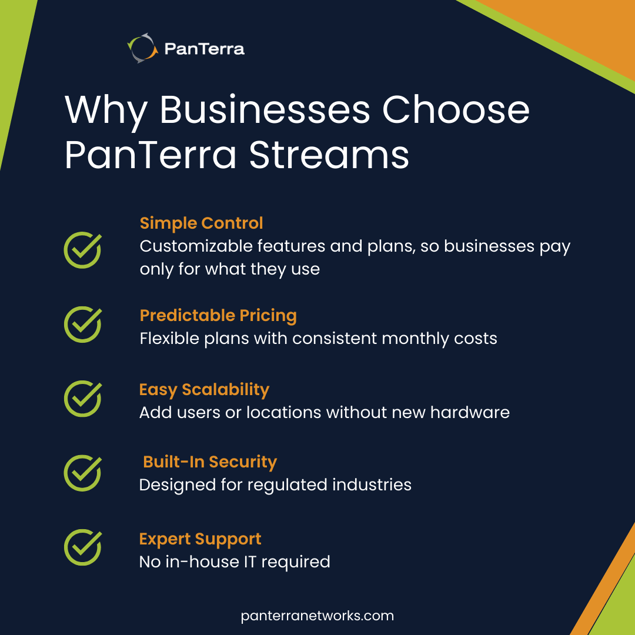
PanTerra Streams offers cloud-based business communications that address common decision factors.
Control and Convenience
Customizable pricing plans come with a variety of features that you control, so you only pay for what you need.
Budget
Because pricing is customizable, you can plan for consistent payments without unnecessary expenses.
Scalability
The software is flexible and scalable for any business's needs.
Data Security
PanTerra has done extensive work to ensure data and security procedures are tailored to a variety of industries, even those with strict compliance and regulations, like the healthcare industry.
IT Expertise
The award-winning support team is ready and available to help your team with any questions or issues.
FAQ
How long does on-premise VoIP implementation typically take?
On-premise VoIP setups usually take several weeks to a few months, depending on infrastructure complexity.
Can businesses switch from on-premise to hosted VoIP later?
Yes. Many businesses migrate to hosted VoIP to reduce maintenance and improve scalability, often with provider support.
Does hosted VoIP work for businesses with multiple locations?
Yes. Hosted VoIP supports multiple locations using a single system, without separate on-site infrastructure.
Next Steps
Whatever your needs, PanTerra is here to help you move toward more efficient and cost-effective business communication.
Evaluate your organization's needs, budget, IT resources, and growth plans to determine which VoIP approach aligns best with your business goals.
.jpg?width=500&height=500&name=Are%20you%20Getting%20a%20Good%20Deal%20(1).jpg)
Comments