How your Middleware Holds Customer Engagement Hostage—and What to Do


Picture this: Your sales team just closed a deal through your CRM, but the follow-up call routes through a completely separate separate system required to barely keep data synchronized.
Sound familiar? One company's CEO loved an AI call center solution until discovering "everything would have to be built around Zapier."
This middleware maze costs more than money.
After reviewing dozens of customer engagement platform evaluations from 2024–2025, we found that companies combining AI-powered business communications with customer engagement software report faster response times, improved customer satisfaction, and leaner operations.
The path forward involves consolidating communication tools into unified platforms that speak directly to your business systems.
How Middleware Becomes Your Weakest Link
Integration Debt Compounds Fast
Companies evaluating customer engagement platforms quickly hit the same wall: integration debt.
Solutions lacking direct CRM sync force teams into middleware dependencies that introduce sync delays, data integrity risks, and rising API costs.
One team we spoke to who was seeking "intelligent call routing based on prospect data" discovered most tools required fragile custom workflows that broke under large call volume.
These connections fail at critical moments. Third-party connectors throttle your data sync, and suddenly your sales team can't access customer history during calls. When APIs change, workflows break and must be rebuilt from scratch.
The financial drain compounds quickly. Beyond subscription costs for middleware, you're paying developer time for maintenance, productivity losses during outages, and opportunity costs when agents work with incomplete data.
In one mid-market evaluation, companies reported spending $15,000 monthly just keeping disparate systems connected, budget that could fund actual growth initiatives.
Finger-Pointing and Customer Engagement
Juggling separate vendors for business phone systems and AI contact center software creates accountability gaps.
Often something breaks, vendors blame each other, and customer experience deteriorates.
Managing multiple contracts means separate renewal negotiations, different support queues, and incompatible product roadmaps.
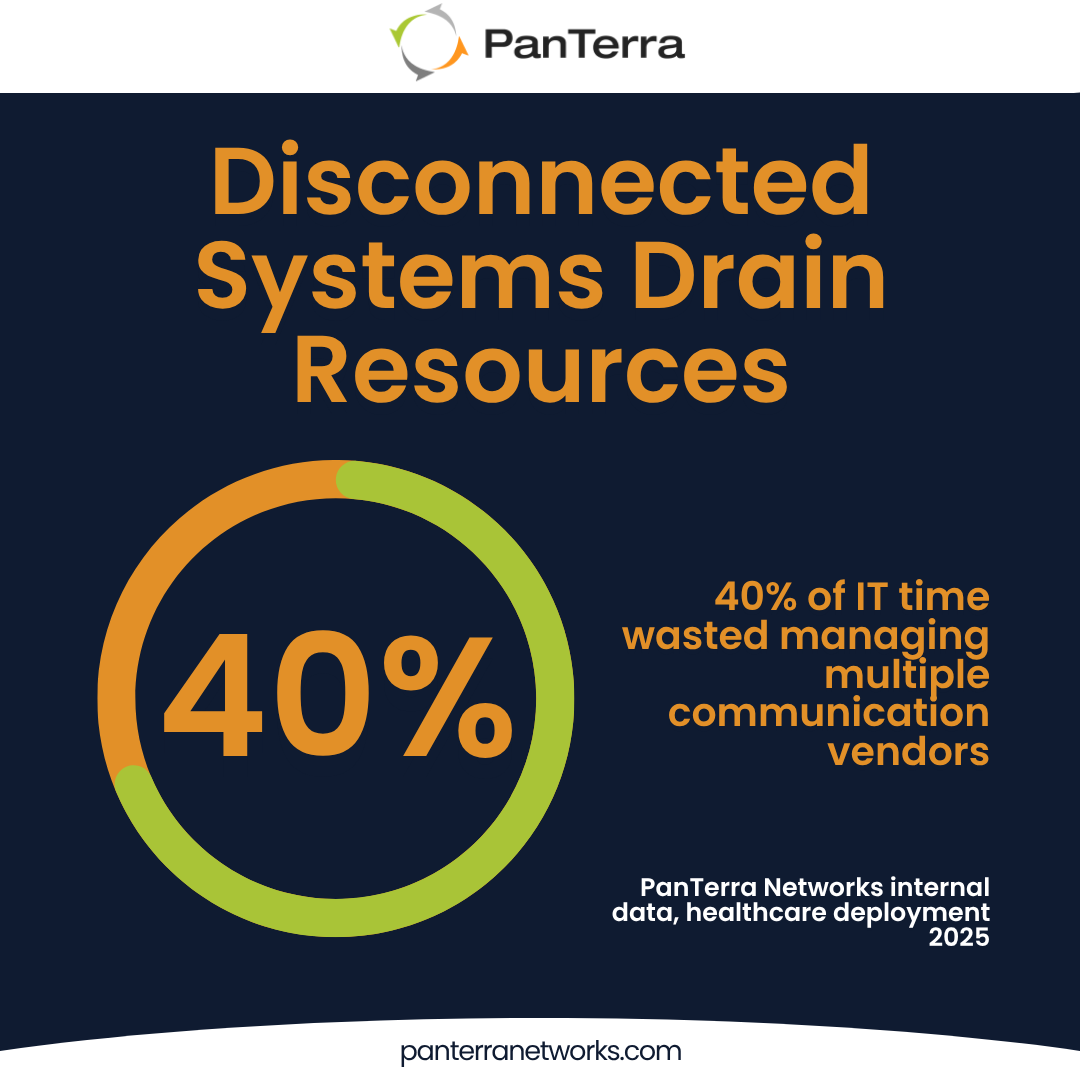
I recently worked with a healthcare organization managing multiple communication vendors. Their IT team spent at least 40% of their time just coordinating between providers.
After consolidating to a unified platform, that time shifted to strategic initiatives—transforming not just time allocation, but team morale and innovation capacity.
How Business Communications and Contact Centers Converge
The separation between internal communication tools (voice, messaging, video) and customer-facing contact center platforms makes less sense every year.
Agents need instant access to internal experts during customer interactions.
Complex technical questions can't wait for ten-minute hold times while hunting answers through separate systems.
Presence indicators, instant messaging, and seamless expert consultation must exist within the same interface handling customer conversations.
Managers require visibility across all communication channels.
Performance tracking becomes impossible when internal collaboration happens in one platform, customer calls flow through another, and chat support runs on a third.
A truly unified platform should provide single-dashboard insights into every interaction. This comprehensive view reveals patterns invisible in fragmented systems and shows exactly how internal communication delays impact customer satisfaction scores.
Native Integration for Customer Engagement
Direct CRM connectivity consistently ranked among the top 3 requirements in 2024-2025 enterprise evaluations we analyzed.
Direct communication between platforms enables automated lead routing based on CRM data, automatic call logging with sentiment analysis, and instant screen pops with complete customer context.
Built-in CRM sync transforms customer interactions. When a VIP customer calls, your system instantly recognizes them, routes to the appropriate specialist, and displays their entire history—before the agent speaks.
This only works reliably through direct integration. Middleware introduces latency that frustrates both agents and customers.
Consider the difference between standalone AI receptionists requiring middleware connectors versus integrated AI like Luna, which works natively within the communication platform.
While standalone tools struggle with data sync and routing delays, integrated AI receptionists handle everything from call answering to appointment scheduling without middleware dependencies.
How to Measure Unified Platform Impact
First Contact Resolution Jumps
Agents operating inside a single interface can access complete customer history, respond faster, and resolve issues immediately.
A retail client here at PanTerra consolidated fragmented systems into a unified platform and saw first-call resolution increase 35% within 3 months.
The improvement came from giving agents instant access to inventory systems, order management, and internal experts through the same interface handling customer interactions.
AI capabilities like real-time transcription, sentiment analysis, and agent coaching work best when embedded throughout the communication stack.
Standalone AI tools miss critical context. Integrated AI understands conversation flow, recognizes escalation triggers, and learns from every interaction across channels. This depth transforms AI from an add-on into a competitive advantage.
Productivity Gains Beyond Cost Savings
Eliminating middleware saves budget, but productivity improvements deliver deeper value.
Here’s what you can expect:
- The constant application switching disappears
- Copy-pasting customer information across systems ends
- Agents handle more interactions with less effort, reducing burnout while improving service quality
- Leadership makes strategic decisions based on comprehensive insights rather than fragmented data
Managers trust unified dashboards because data comes from one source. No more reconciling conflicting vendor reports.
And that story includes small business too.
Productivity gains are not exclusive to large enterprises.
Customer Engagement: Your Path to Platform Consolidation
Successful customer engagement requires systems that communicate natively, just like coordinating specialists in patient care requires unified medical records.
When evaluating platforms in 2026, prioritize:
- Direct CRM connectivity,
- Built-in contact center capabilities (not bolt-ons),
- True omnichannel orchestration including voice, SMS, chat, and video,
- Enterprise-grade AI without middleware dependencies, external scripts or API surprises.
The migration path starts with documenting current workflows, identifying integration points, and choosing a partner who understands both your operational reality and growth vision.
Run systems in parallel during transition, let success stories drive adoption, and maintain focus on the end goal: seamless customer engagement.
We've built from the ground up a unified platform for both business communications and customer engagement, from smart call routing to CRM-integrated AI receptionists.
Streams.AI eliminates the middleware maze while delivering the unified experience your customers expect.
Reach out now and let's chart your path to truly unified customer engagement software in 2026.
.jpg?width=500&height=500&name=Are%20you%20Getting%20a%20Good%20Deal%20(1).jpg)
Comments