What $500K in AI Should Actually Deliver


A $500K AI contact center investment should show measurable improvement in year one—faster resolution, fewer repeat calls, and clear workload relief for agents.
If those outcomes aren’t visible, the gap is usually scope, adoption, or measurement, not the technology.
The housing director wasn’t looking for AI. She was just tired of emergency calls going unanswered.
After switching to a unified communications platform, her team connected within days. Costs dropped. Residents got faster responses. And the technology? Surprisingly easy to use.
That’s the difference between AI that delivers and AI that just sounds impressive.
In this article, we break down what a $500K AI investment should actually deliver. We examine real costs, meaningful outcomes, and human impact. These factors matter when vendors overpromise and underdeliver.
Where does a $500K AI contact center budget really go?
Mostly into licenses, setup, training, and adoption costs—not the AI feature itself.
We recently consulted with a retail business that allocated $500K for AI. Their final spend exceeded projections once rollout costs surfaced:
- Software licenses/subscriptions
- Setup/pro services
- Training/enablement (initial + ongoing)
- Adoption drag (turnover, rework, maintenance)
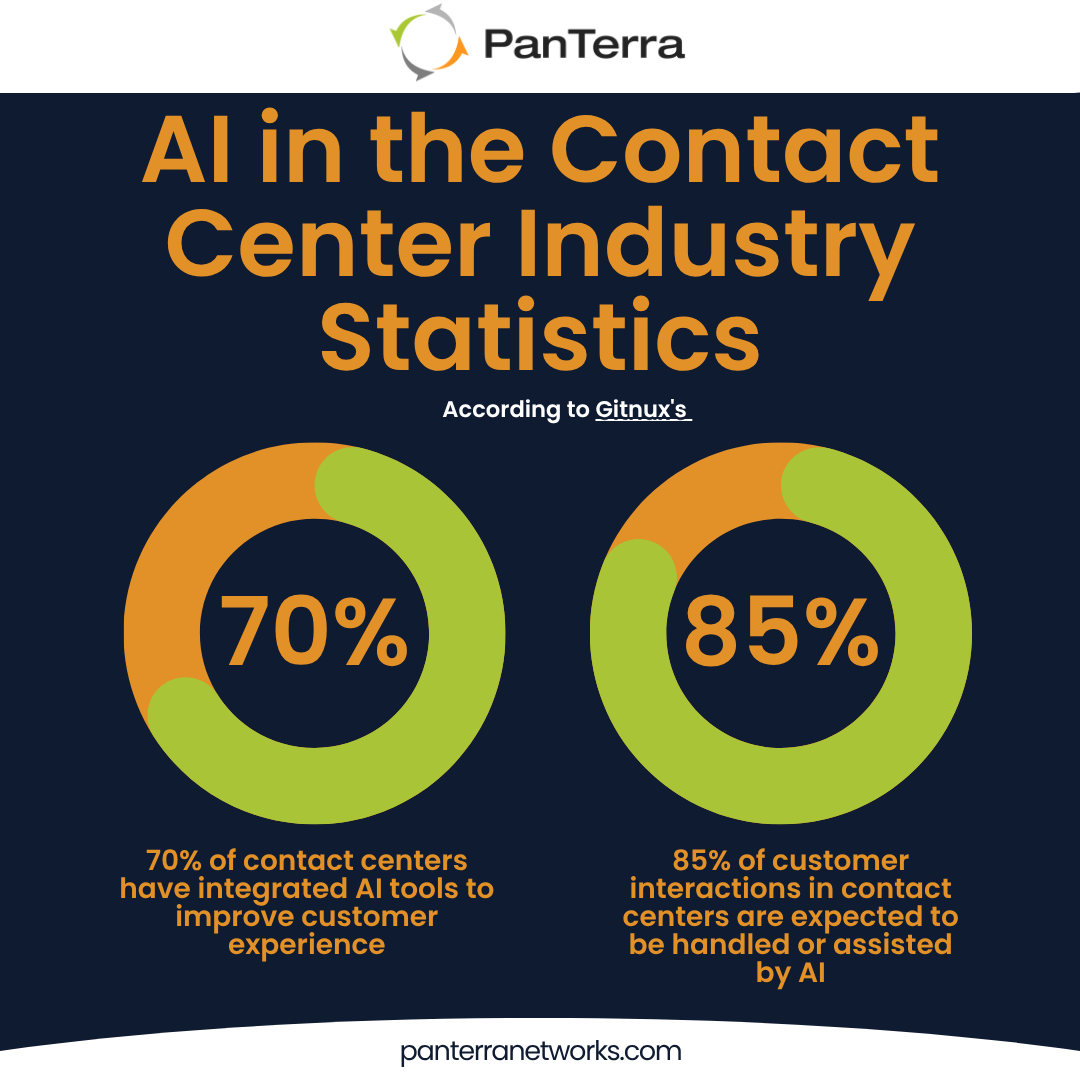
According to Gitnux's "AI in the Contact Center Industry Statistics:
- 70% of contact centers have integrated AI tools to improve customer experience
- 85% of customer interactions in contact centers are expected to be handled or assisted by AI
Understanding AI contact center costs prevents expensive hidden expenses.
Why do most AI ROI promises fall flat?
Because vendors sell percentage claims instead of tying ROI to your baseline metrics.
Vendors frequently promise AI solutions will slash costs by 50%. Does this sound familiar? Many leaders nod because they've heard similar claims.
A tech startup we consulted embraced these bold promises last year. After six months of implementation, they achieved only a 10% improvement because baseline metrics and rollout scope weren’t defined.
Vague productivity metrics rarely deliver actual business impact. Concrete measurements tell the true story.
Our work with the PanTerra–Five9 partnership has demonstrated measurable results that matter, such as:
- 25% shorter call durations
- Customer satisfaction scores are rising by 8 points
Focus on these tangible KPIs for accurate AI assessment:
- Average Handle Time (AHT)
- First Call Resolution (FCR)
- Customer Satisfaction (CSAT)
- Call Deflection Rates
- Agent Utilization
When vendors speak about “transformative productivity,” request specific benchmarks. Half-million-dollar investments require concrete returns to justify the expense.
What should a strong first year of AI adoption look like?
A strong first year shows early routing/deflection wins, steady agent adoption, and measurable KPI movement by month 6–12.
Success with AI doesn’t happen overnight, but it also shouldn’t take a year to show impact.
One mid-sized PanTerra client in the healthcare space began with modest goals. They focused on improving customer satisfaction and reducing average handle time. Over the first year, they saw steady progress on both metrics.
The key was a phased rollout and consistent support. AI features were introduced gradually, starting with basic call deflection and real-time assist. Training was integrated into weekly team routines. Managers collected agent feedback and adjusted workflows based on what actually helped, not what sounded impressive.
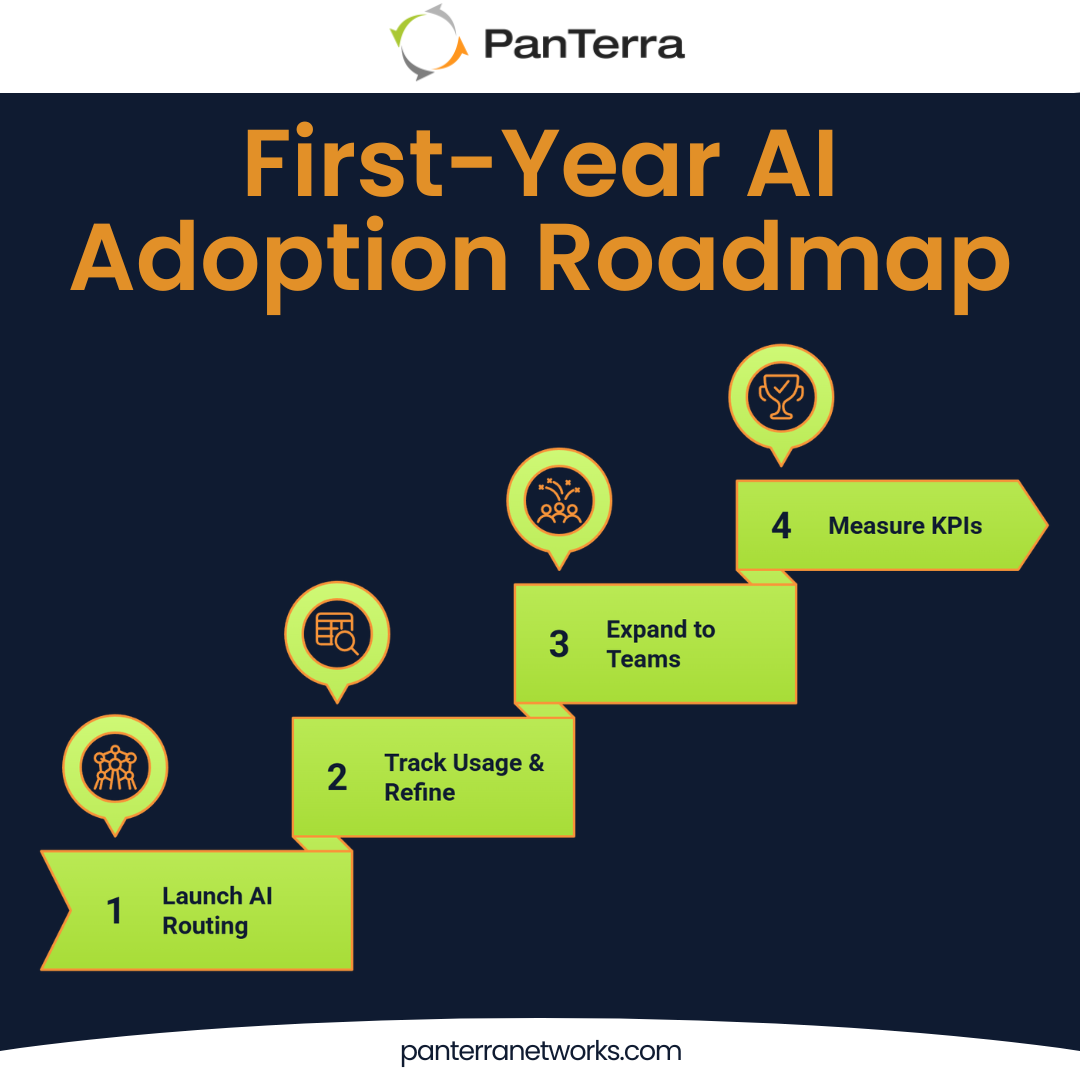
Here’s what a strong first year often looks like:
- Months 1 to 3: Launch AI routing and automate after-call summaries
- Months 4 to 6: Track usage, offer coaching, and refine prompts
- Months 7 to 9: Expand to additional teams and build internal champions
- Months 10 to 12: Measure KPIs and document what worked best
Teams that treat AI as a long-term collaboration, not a quick install, see more reliable results. They listen to their agents, set realistic expectations, and adapt when needed.
Early signs of success include higher CSAT, smoother workflows, and strong agent adoption. When those elements align, AI becomes more than a tool. It becomes part of how the team works and wins.
What makes or breaks AI adoption in a contact center?
Agent trust and day-to-day workflow fit decide whether AI sticks.
Why Don't Agents Trust AI?
Because agents assume AI is meant to replace them unless leaders prove it reduces admin work and improves live-call support.
A financial services agent approached our team with worry in her voice.
“Will this robot take my job?” she asked.
Six months later, this same agent celebrated how AI reduced after-call work by 30%, creating space for meaningful customer conversations.
Fear of replacement creates the biggest barrier to AI adoption. Successful implementations position agents as customer-experience specialists with AI support.
According to CMSWire, AI is increasingly being used to empower agents rather than replace them, a trend that strengthens the emotional connection between customers and brands.
Building trust usually comes from:
- transparent communication about AI’s purpose
- gradual workflow changes that respect existing processes
- regular feedback sessions
- early wins that show value to agents
Technology exists to support people. When agents feel secure, AI investments deliver maximum returns.
What Agents Actually Want from AI
Agents want AI to take repetitive admin work off their plate and give useful real-time help during calls.
Mark, a customer service representative, initially approached our new AI tools with hesitation. Six months later, he shared with our team how automated summaries saved him 15 minutes per interaction.
"Now I can focus on really listening to customers instead of frantically typing notes," he explained.
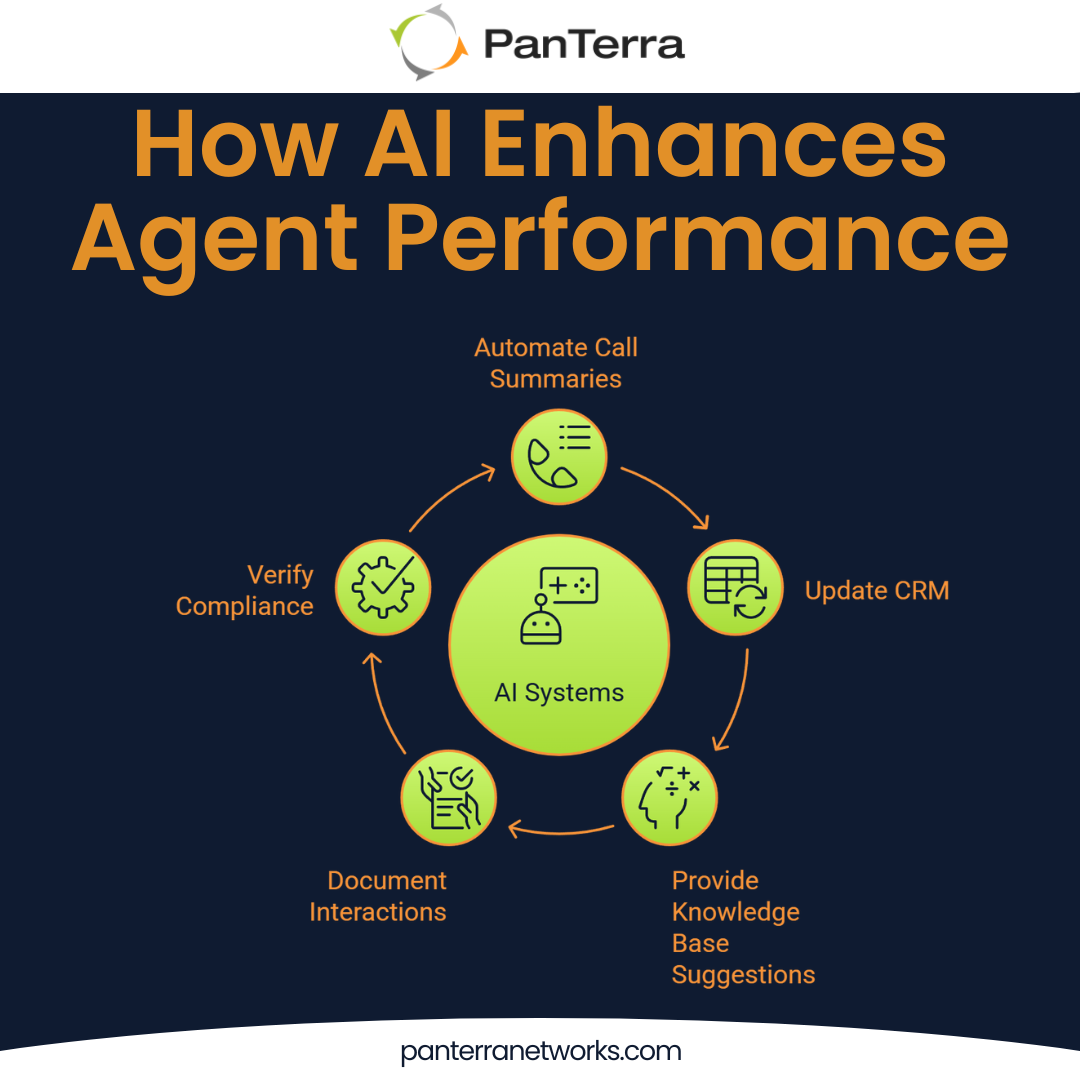
Effective AI systems manage tedious responsibilities, allowing agents to excel at human connections:
- Automatic call summaries and CRM updates
- Real-time knowledge base suggestions
- Post-interaction documentation
- Compliance verification and quality monitoring
Agents dedicate more energy to showing empathy, solving complex problems, and building relationships when freed from administrative burdens. As one representative noted: "AI manages information gathering while we concentrate on emotional intelligence."
Case Study: Norwich Housing Authority — Real Impact Without Complexity
Norwich Housing Authority struggled with outdated communication tools, and after-hours emergencies often went unanswered. Once AI routing was live, the team saw faster emergency response and smoother after-hours coverage without heavy IT lift.
Executive Director Tamara Cobb approached the challenge with honesty:
“Technology usually intimidates me,” she admitted, “but residents deserved better service.”
The team selected a user-friendly cloud communications solution. Setup took just days. Four extensions became operational immediately. Emergency routing worked flawlessly without specialized IT support.
Measurable improvements followed quickly:
- Response times to inquiries decreased by 40%
- Operational communication costs dropped 30%
- After-hours emergency coverage reached 100%
- Implementation caused zero disruption
Maintenance staff now receive urgent AI-routed requests instantly. Previously skeptical technicians have become the system’s biggest advocates.
This AI contact center case study demonstrates how traditional organizations can adopt advanced technology with ease.
What does scalable, ethical AI look like in a contact center?
It looks like AI that integrates smoothly, protects data, and keeps performance consistent as volume grows.
What Should AI Integration Feel Like?
Seamless—minimal disruption, quick setup, and immediate value.
According to a study by Frost & Sullivan, hosted contact center services can significantly reduce total cost of ownership compared to on-premise systems. The study found that companies saved up to 77% of TCO and, not least, 36% using hosted versus premises in the first year of use.
Teams that choose integrated systems report 15–25% cost savings and up to 20% improvement in call deflection rates. These results reflect real business impact for companies seeking faster, smoother adoption with less friction.
We recently spoke with a technology director who shared: “After six months of struggling to connect our API solution with ticketing systems, a unified platform accomplished the same task in three days.”
This experience mirrors what we hear from numerous clients seeking simpler paths to AI adoption. When evaluating options for your organization, remember that technical simplicity often delivers the fastest ROI and reduces team frustration throughout implementation.
Ethical AI in Practice
Ethics must be prioritized in AI implementation from day one. A municipal government we worked with saw adoption rates double after implementing transparent data-use policies that addressed staff concerns.
Clear opt-out pathways give customers control over their information. Organizations report significant trust improvements when they provide these options upfront.
Fairness audits integrated into AI architecture detect potential bias before affecting customer interactions. These automated checks ensure equitable treatment across all user groups.
Human fallback mechanisms ensure edge cases receive proper attention. When AI encounters unfamiliar situations, calls route seamlessly to human agents.
Your investment should deliver both efficiency and ethical excellence. Implementing these guardrails ensures your AI fosters trust while driving business results.
Scaling with Confidence (Not Chaos)
Strategic scalability separates successful AI implementations from costly failures in contact centers. Many organizations discover scaling limitations only after significant investment. At that point, options narrow, and costs multiply.
What does confident scaling require?
It requires cloud elasticity, multilingual support, accurate forecasting, and security that stays consistent as volume grows.
Let’s explore four critical pillars that support sustainable growth:
- Elastic cloud infrastructure provides the foundation for handling unpredictable demand fluctuations. During peak seasons, systems automatically expand capacity without performance degradation. A retail partner experienced this firsthand when their platform seamlessly managed triple the normal call volume during Black Friday, all without additional hardware costs.
- Multilingual NLP capabilities transform global coverage possibilities. Current systems now understand contextual nuances across 100+ languages, enabling teams to support international customers without proportional staff increases. This technology bridges cultural gaps while maintaining consistent service quality.
- Workforce forecasting tools eliminate the traditional guesswork in staffing decisions. These AI-powered systems analyze historical patterns alongside real-time data to predict volume with high accuracy. Teams using these tools report up to 15% reduction in overstaffing costs while improving service levels.
- Zero-trust security frameworks protect expanding digital touchpoints through continuous verification. Rather than assuming safety within network boundaries, these systems verify every access request regardless of source. AI-driven threat detection identifies unusual patterns before breaches occur, safeguarding customer data across all channels.
These four pillars keep performance steady as volume and complexity grow
So—What Should $500K Actually Deliver?
By year one, $500K in contact center AI should reduce handle time, cut repeat contacts, and improve agent adoption without adding operational overhead.
The right platform reduces friction and increases consistency. It integrates smoothly, supports agents in real time, and provides leaders with useful, trustworthy data.
In practice, we’ve seen the strongest results when AI is embedded directly into cloud communications platforms like PanTerra Streams.AI, rather than bolted on as standalone tools that agents must learn, trust, and maintain.
In one deployment with PanTerra, a mid-sized team reported faster resolution times and clearer communication without needing additional training cycles or infrastructure changes.
At its best, AI should quietly improve the way teams work. It should help people do their jobs better without demanding attention or explanation. That is what real success looks like.
Frequently Asked Questions
How long does AI implementation typically take?
Most teams see initial results within 3 months. Full integration happens over 12 months.
Will AI replace human agents?
No. AI handles routine tasks while agents focus on complex customer interactions.
What's the real cost of AI implementation?
Budget 20% above initial software costs for training, integration, and maintenance.
How do we measure AI success?
Track specific KPIs: handle time, first call resolution, and customer satisfaction scores.
What if our agents resist the technology?
Start with transparent communication. Show how AI reduces administrative work, not jobs.
.jpg?width=500&height=500&name=Are%20you%20Getting%20a%20Good%20Deal%20(1).jpg)
Comments