What Microsoft Teams Phone Architecture Really Is


Microsoft Teams Phone represents a specific architectural choice, not just a feature selection. Unlike traditional telephony systems that exist as independent infrastructure, Teams Phone emerges from within the Microsoft 365 platform itself.
This distinction shapes everything about how the system behaves. The architecture reflects deliberate design decisions about control, ownership, and operational boundaries that organizations must understand before implementation.
When we examine Teams Phone through an architectural lens rather than a feature checklist, patterns emerge. These patterns explain why certain capabilities exist while others remain permanently out of reach, regardless of optimization efforts.
This analysis explores what Teams Phone was architecturally designed to be, rather than what organizations might wish it could become. Understanding this distinction explains why some implementations align with design intent while others accumulate technical debt fighting against it.
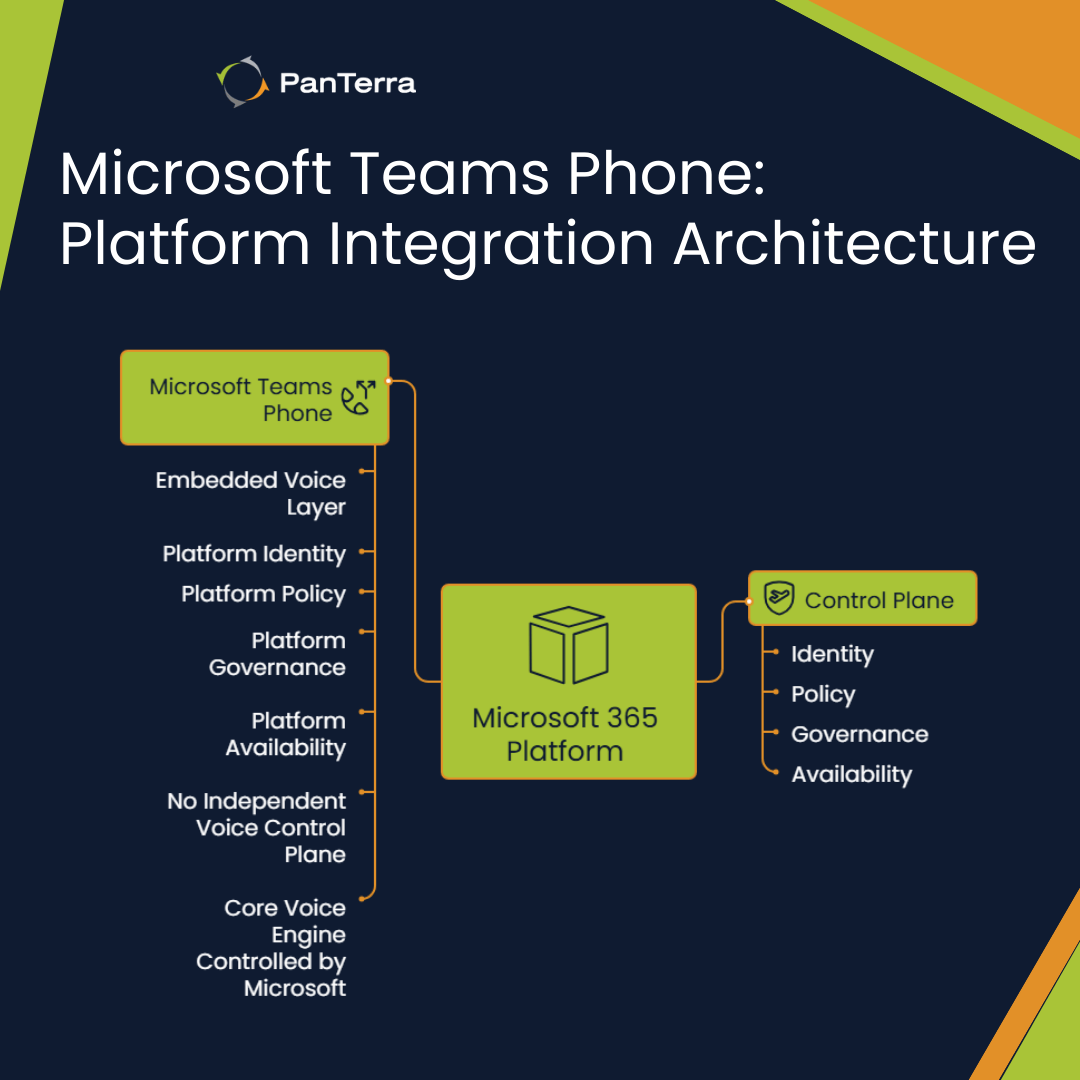
What is Microsoft Teams Phone from an architectural standpoint?
Microsoft Teams Phone is a collaboration-native voice service embedded within the Microsoft 365 control plane. It exists not as a standalone telephony platform but as an integrated communication layer that inherits the architectural characteristics of its parent platform.
This architecture means voice becomes subject to the same governance, availability, and control mechanisms as other Microsoft 365 services. The system treats calling as another form of collaboration rather than a separate infrastructure domain requiring independent management.
The fundamental design prioritizes platform coherence over telephony specialization. Where traditional PBX systems offer deep customization within the voice domain, Teams Phone offers broad integration across the collaboration suite. This trade-off is architectural, not accidental.
From a systems perspective, Teams Phone represents the logical conclusion of unified communications convergence. Voice no longer maintains separate identity, control, or availability guarantees but instead becomes absorbed into the broader platform architecture.
What was Microsoft Teams Phone architecturally built to optimize?
Teams Phone architecture optimizes for administrative simplicity and platform integration above telephony depth. The design assumes organizations value unified management experiences more than specialized voice capabilities.
This optimization manifests through centralized policy enforcement, single-pane administration, and inherited security models. Rather than maintaining separate voice infrastructure with its own operational requirements, organizations manage voice through familiar Microsoft 365 interfaces.
The architecture deliberately constrains feature complexity to maintain this simplicity. Microsoft chose to limit telephony options rather than recreate the full complexity of traditional PBX systems within their platform. This decision reflects a philosophical stance about what unified communications should be.
Platform integration takes precedence over voice independence in every architectural decision. User identities, policies, and permissions flow naturally between collaboration and voice contexts because they share the same underlying control plane. This tight coupling enables scenarios impossible with loosely integrated systems.
The design assumes most organizations need reliable, straightforward voice capabilities rather than complex telephony features. By optimizing for the common case rather than edge requirements, the architecture remains manageable at scale.
What architectural boundaries are inherent to Teams Phone's design?
Architectural boundaries in Teams Phone emerge from its fundamental platform dependency. The system cannot operate independently of Microsoft 365's control plane, creating inherent coupling between voice availability and platform health.
These boundaries manifest as hard limits on customization depth. While surface-level modifications are possible through supported APIs and configuration options, the core voice engine remains under Microsoft's exclusive control. Organizations cannot alter fundamental call routing logic, implement custom protocols, or modify quality of service parameters beyond preset options.
The platform enforces strict ownership boundaries between what organizations can configure and what Microsoft controls. This separation isn't merely technical but architectural—reflecting assumptions about where responsibility should lie in cloud services.
Extension points exist but within carefully defined parameters. Microsoft's architecture documentation details these boundaries explicitly. Organizations can add functionality through approved mechanisms, but cannot modify core platform behavior.
The architectural ceiling becomes visible when organizations require capabilities outside Microsoft's design envelope. No amount of configuration or optimization can add features that violate the fundamental architectural assumptions. These limits are structural, not temporary.
What happens when Teams Phone is used beyond its architectural intent?
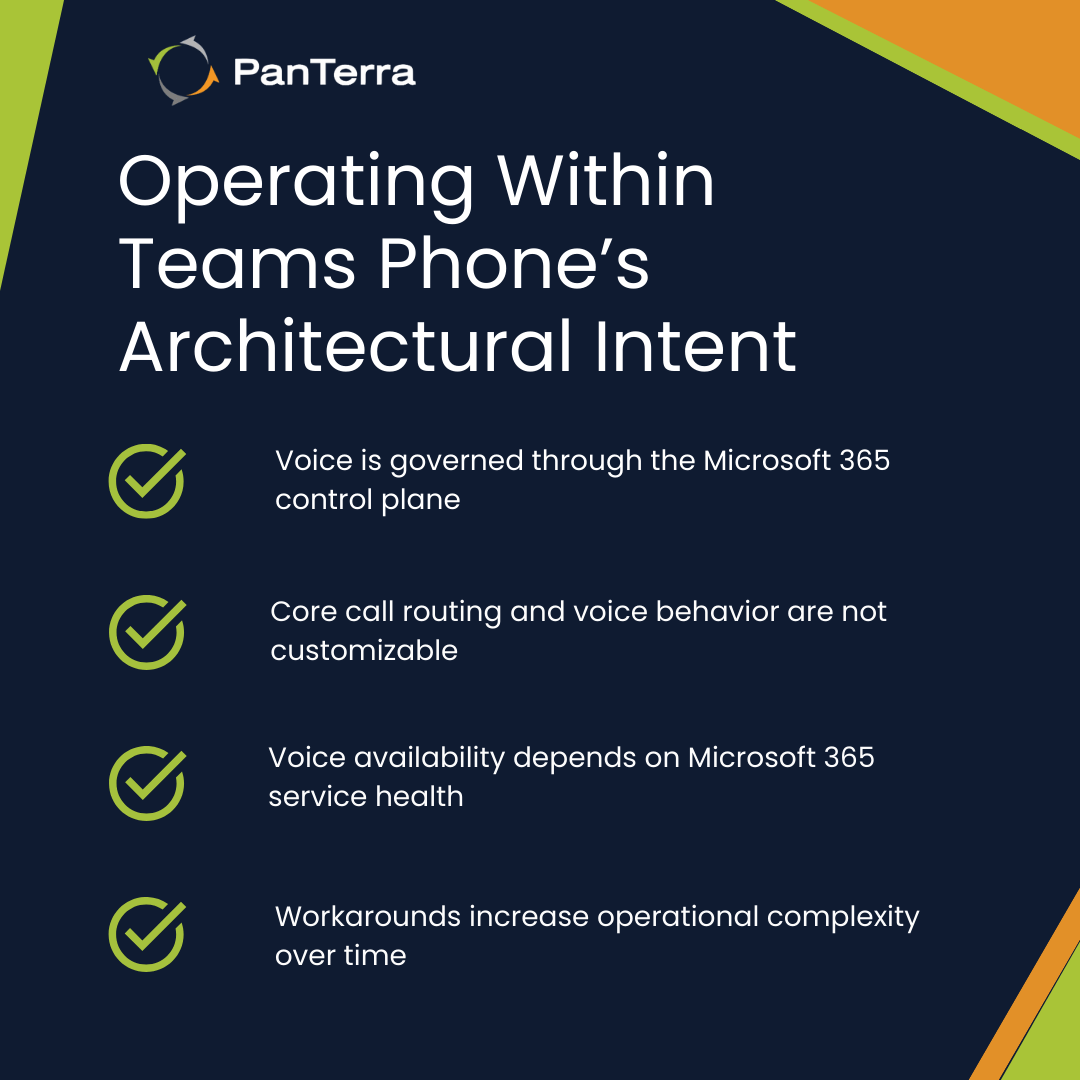
Using Teams Phone beyond its architectural intent creates accumulating friction that manifests as operational complexity. Organizations begin implementing workarounds that temporarily address specific limitations but gradually erode system maintainability.
Each workaround introduces dependencies that complicate future changes. What begins as a simple fix for one limitation evolves into a web of custom configurations, third-party tools, and manual processes. The architecture resists these modifications through increased brittleness and maintenance overhead.
Technical debt accumulates faster when fighting architectural boundaries than when working within them. Support teams must understand not just Teams Phone but also the layers of customization applied on top. Documentation becomes complex, knowledge transfer grows difficult, and troubleshooting requires specialized expertise.
The architecture cannot transform into something it wasn't designed to be. Attempts to force Teams Phone into traditional PBX patterns create instability without achieving the desired outcome. The platform's design intent acts as a gravitational force, constantly pulling implementations back toward its optimization targets.
These patterns explain why some organizations introduce complementary architectures that remain decoupled from the Teams control plane while preserving the collaboration interface.
This approach to voice architecture and continuity explains how some organizations maintain Teams collaboration benefits while introducing independent voice control planes that operate within but remain decoupled from the Teams environment.
Architectural Implications for Voice Strategy
Understanding Teams Phone architecture transforms how organizations approach voice strategy. Rather than viewing limitations as problems to solve, they become design boundaries that inform architectural decisions.
The recognition that Teams Phone optimizes for collaboration-first scenarios rather than voice-first requirements helps organizations align expectations with reality. This alignment prevents the accumulation of unsustainable workarounds and guides teams toward architecturally sound solutions.
Strategic decisions should account for Microsoft's architectural trajectory, not just current capabilities. The platform's evolution will follow its design philosophy, enhancing integration and simplification rather than adding telephony complexity.
Organizations requiring capabilities beyond Teams Phone's architectural boundaries face a choice: accept the constraints or implement complementary architectures. Neither choice is universally correct—the decision depends on whether organizational requirements align with Microsoft's architectural vision.
The most successful implementations recognize Teams Phone for what it architecturally is: a collaboration platform with voice capabilities, not a telephony platform with collaboration features. This distinction, while subtle, fundamentally shapes what's possible within the architecture.
Frequently Asked Questions
What type of system architecture does Microsoft Teams Phone represent?
Microsoft Teams Phone represents a collaboration-native architecture where voice services exist as an embedded layer within the Microsoft 365 control plane, rather than as independent telephony infrastructure with its own operational controls.
Why can't Teams Phone match traditional PBX customization capabilities?
The architecture prioritizes platform coherence and administrative simplicity over telephony depth, creating deliberate constraints that prevent the deep customization possible with standalone PBX systems while maintaining manageable complexity at scale.
What happens to Teams Phone during Microsoft 365 service disruptions?
Teams Phone's architectural dependency on the Microsoft 365 control plane means voice services become unavailable during platform outages, as the system cannot operate independently from its parent architecture's availability mechanisms.
How do architectural boundaries affect Teams Phone extensibility?
While Microsoft provides approved extension points through APIs and configuration options, the core voice engine remains under exclusive platform control, creating structural limits on how deeply organizations can modify system behavior.
When should organizations consider complementary voice architectures?
Organizations should evaluate complementary architectures when their requirements exceed Teams Phone's design intent, particularly when needing voice-first capabilities, independent availability guarantees, or customization beyond the platform's architectural boundaries.
.jpg?width=500&height=500&name=Are%20you%20Getting%20a%20Good%20Deal%20(1).jpg)
Comments