What Customer Engagement Strategies Drive Business Growth?


Customer engagement strategies are structured approaches that use personalization, automation, feedback, and community-building to strengthen customer relationships, increase retention, and drive sustainable business growth.
The bakery owner Elisa discovered this firsthand when shifting focus from simple outreach to genuine connection.
Within three months, her regular customers doubled, and community members began promoting her business organically, all through strategic engagement improvements rather than product changes.
Key Takeaways
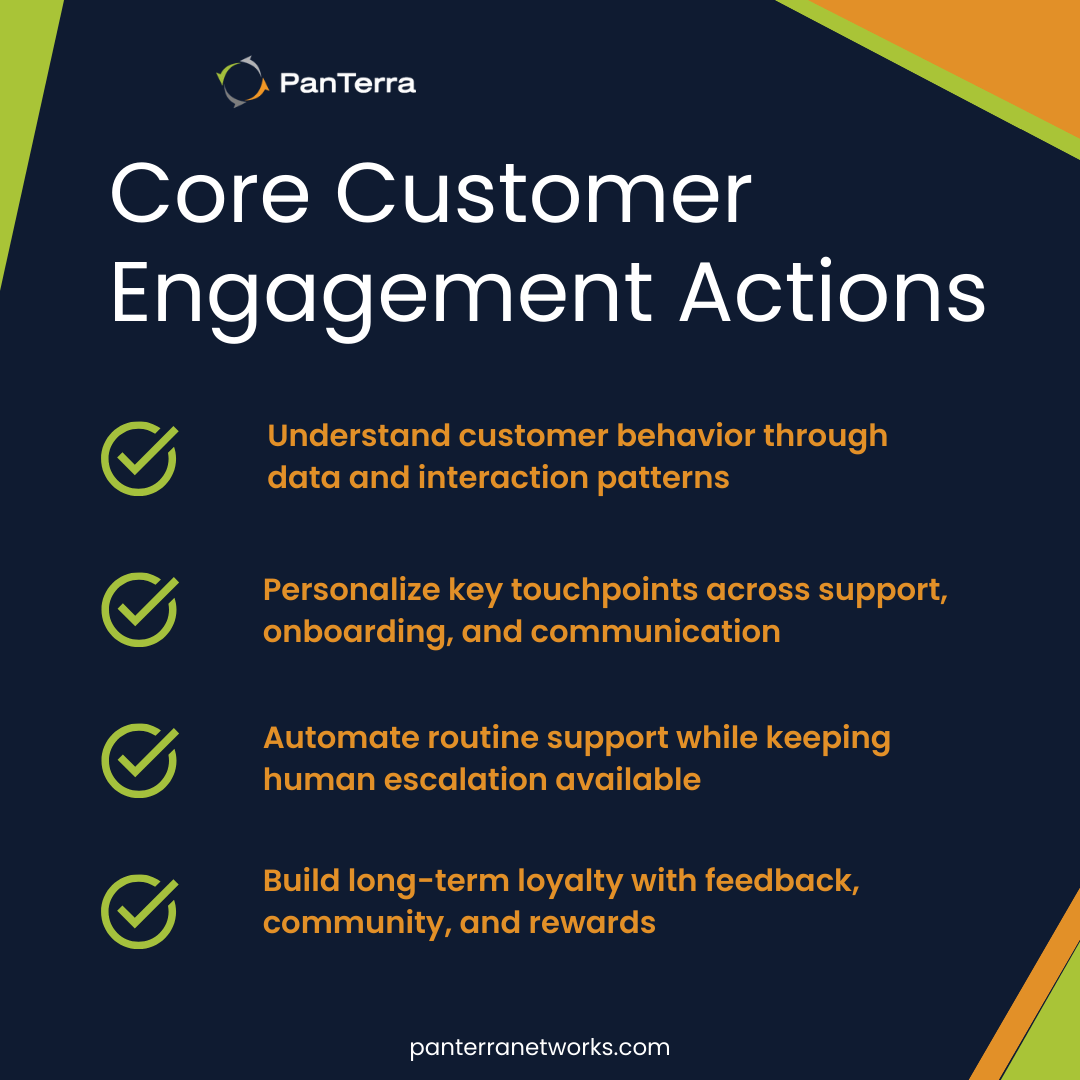
- Personalization drives loyalty and repeat business by aligning interactions with real customer behavior and intent.
- Automation improves engagement at scale by speeding up support while preserving human empathy.
- Effective onboarding increases retention by guiding customers to early success and reinforcing value quickly.
- Real-time feedback enables continuous improvement, allowing businesses to adapt engagement strategies as expectations change.
- Community and user-generated content build trust and advocacy, turning customers into long-term growth drivers.
How Can Personalization Improve Customer Engagement and Loyalty?
Personalization improves customer engagement and loyalty by using behavioral data to deliver relevant, timely interactions instead of generic messaging.
Insights from website activity, purchase history, and support conversations reveal customer intent and emotional drivers, enabling businesses to create experiences that feel personal and increase repeat engagement.
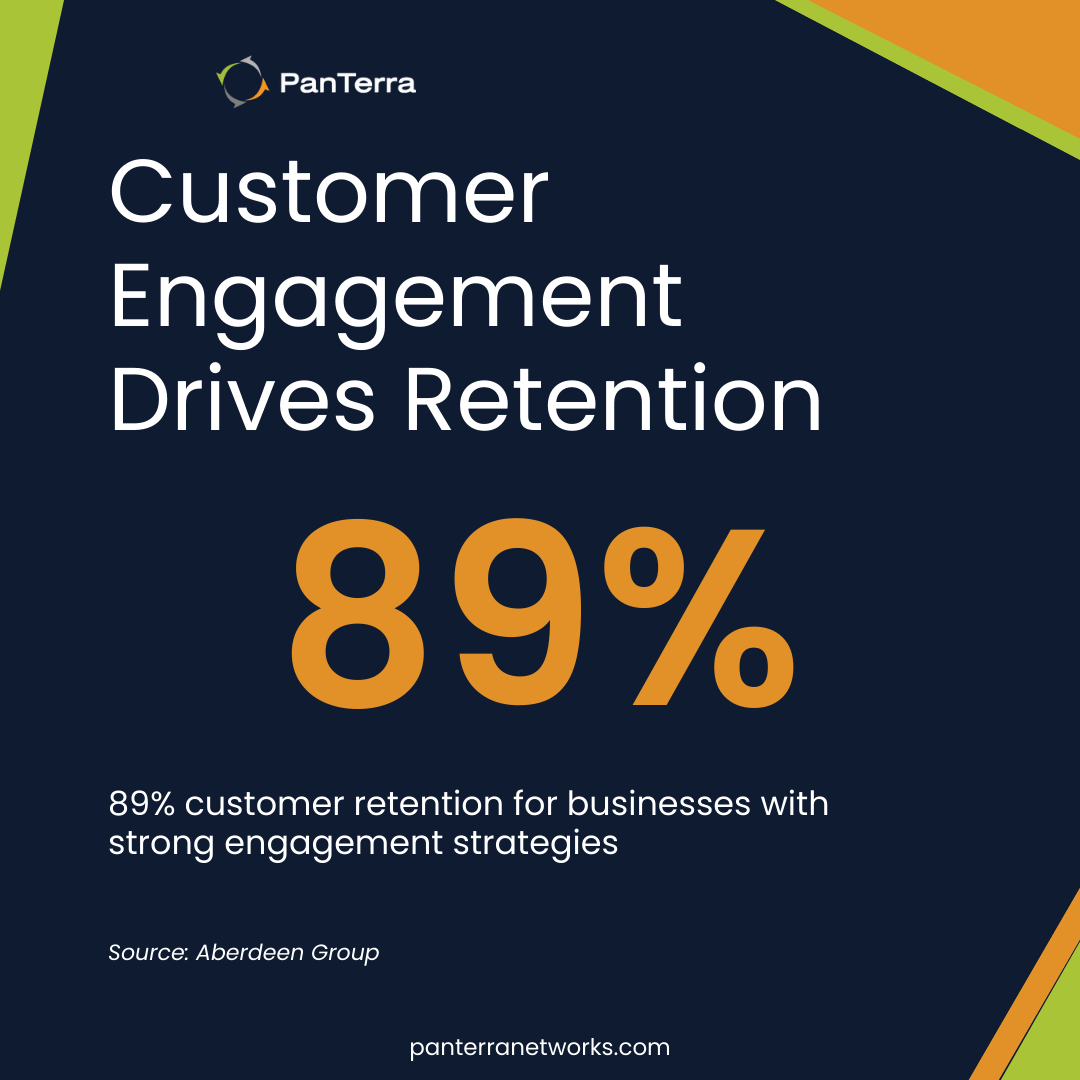
Industry research shows that companies with strong omnichannel customer engagement strategies retain around 89% of their customers, far higher than businesses with weaker engagement efforts.
Recent research from Deloitte shows that personalization plays a key role in building customer loyalty, with consumers increasingly expecting tailored experiences and willing to share data for more relevant interactions.
This happens because behavioral data shows not just what customers buy, but what matters to them—exactly what Elisa discovered when she started tracking which pastries prompted repeat visits versus one-time purchases.
Segmentation by browsing patterns, buying frequency, or onboarding behavior unlocks highly relevant interactions. One small business implementing behavior-based segmentation saw a 28% lift in average order value through more targeted messaging.
The key is applying segmentation thoughtfully rather than creating endless micro-categories.
Privacy and Trust in Personalization
Trust serves as the gateway to effective personalization. Transparency about data collection, usage, and security builds ethical engagement frameworks. Inform users what data is collected, why it's needed, and how it's protected.
Regulations like GDPR and CCPA provide frameworks for building trust-based engagement rather than obstacles to overcome.
What Role Does Automation Play in Modern Customer Support?
Automation improves modern customer support by increasing availability and response speed while preserving empathy through human handoffs.
Chatbots efficiently handle routing and common inquiries, allowing human agents to focus on complex or emotionally sensitive issues.
In one e-commerce example, a layered automation approach reduced response times by 50% and increased customer satisfaction (CSAT) scores by 18%.
Having a sophisticated AI Receptionist that serves as your digital teammate changes support dynamics. This enables 24/7 availability without dropping calls while delivering standout service consistently.
Design interactions using clear, conversational language with visible paths to human help. Avoid robotic responses by making every reply feel like part of a real conversation. Poorly programmed bots frustrate customers and damage engagement efforts.
Key metrics to track include:
- Time-to-resolution
- Handoff rate to human agents
- Drop-off points
- Sentiment scores
Weekly iteration based on these metrics transforms support from a cost center into a growth engine.
How Do Successful Onboarding Programs Boost Retention?
Successful onboarding programs boost retention by guiding customers to early wins and reinforcing value during the first days of use.
Beyond welcome emails, effective onboarding uses interactive tutorials, timely check-ins, and supportive nudges to build confidence, reduce friction, and encourage continued engagement.
A SaaS client introducing gamified onboarding saw product activation jump 35%. This approach uses emotional milestone messages like "First 5 tasks complete!" to reinforce progress and maintain engagement momentum. One boutique platform using emotionally intelligent triggers saw 40% higher weekly retention through this approach.
Segment new users by technical comfort level, goals, or company size for tailored experiences. Someone switching from a competitor needs different guidance than someone new to the product category. This customization prevents overwhelming new users while ensuring experienced ones aren't bored.
Use onboarding to reinforce the customer's smart decision. Remind them what success looks like and celebrate wins early.
How Does Real-Time Feedback Improve Customer Engagement?
Real-time feedback improves customer engagement by allowing businesses to respond quickly to changing expectations and address issues while experiences are still fresh.
When customers see visible changes based on their input, they feel heard and are more likely to stay engaged. In one example, a software company redesigned its dashboard after in-app feedback revealed confusion, resulting in a 22% increase in feature adoption.
Real-time feedback loops through in-app surveys, support chat ratings, and behavioral triggers capture insights when emotions are fresh. This immediacy provides more accurate data than retrospective surveys sent weeks later.
Why Does User-Generated Content Increase Trust?
User-generated content increases trust by providing authentic social proof from real customers rather than brand messaging.
When customers share experiences through reviews, testimonials, hashtags, or photo campaigns, it reinforces credibility and helps prospective buyers make more confident decisions.
One outdoor retailer saw a 25% increase in repeat purchases after launching a simple photo contest featuring customer gear. This social proof carries more weight because it comes from peers rather than the brand itself.
Launch campaigns that make participation easy and rewarding. Whether through Instagram hashtags, review incentives, or customer spotlights, give customers platforms to share their stories naturally.
How Do Community and Loyalty Programs Drive Long-Term Retention?
Community and loyalty programs drive long-term retention by turning customers into active participants and brand advocates.
By creating spaces for connection, feedback, and shared experiences, businesses build relationships competitors cannot easily replicate.
In one example, a food brand increased retention by 3x after launching a customer recipe-sharing community.
Community forums, user groups, and Q&A events foster connection beyond transactions. Members help each other, reducing support burden while building deeper brand affinity.
Gamified loyalty programs transform routine purchases into rewarding experiences through points, progress bars, and unlockable perks. These programs tap into natural achievement desires while building habitual engagement patterns. Whether through tiered rewards, exclusive access, or milestone celebrations, gamification keeps customers actively engaged rather than passively purchasing.
How Can Businesses Build Scalable Engagement Systems?
Businesses build scalable engagement systems by using flexible platforms, real-time feedback loops, and cross-functional coordination that adapt as customer needs change.
By centralizing communication and continuously optimizing based on data, teams can maintain consistent engagement today while scaling efficiently for future growth.
Build frameworks that evolve with your needs. Use CRM tools that grow with data requirements while automating repetitive steps but preserving human checkpoints for critical interactions. Unified communication platforms help centralize these touchpoints as teams expand.
The goal is building systems that care. When you listen deeply, personalize ethically, and support responsively, customers feel it. They stay, refer others, and grow with you—just as Elisa's bakery customers became her strongest marketing channel.
FAQ
What’s the difference between customer engagement and customer satisfaction?
Engagement measures ongoing interaction, while satisfaction reflects sentiment about specific experiences.
How quickly can small businesses see results from engagement strategies?
Many see early gains within 60–90 days, with deeper impact over time.
Do engagement strategies work for B2B companies?
Yes. B2B engagement emphasizes long-term relationships and account-level relevance.
Next Steps
Evaluate your current customer touchpoints to identify where personalization, automation, or community-building can improve engagement.
Start with one strategy that addresses your biggest gap, whether that’s support response times, onboarding completion rates, or customer feedback collection.
For businesses ready to scale, platforms like PanTerra help unify communication, support, and customer interactions into a single system, making engagement easier to manage as teams and customer expectations grow.
.jpg?width=500&height=500&name=Are%20you%20Getting%20a%20Good%20Deal%20(1).jpg)
Comments